
SEO Mistakes to Avoid for Better Rankings & Traffic 2026
Search engine optimization is one of the most effective ways to grow a website, increase organic traffic, and build online visibility. However, many website owners unknowingly make common SEO mistakes that hurt their rankings instead of improving them. Even small errors can negatively impact website performance, user experience, and search engine trust.
Modern SEO is no longer just about adding keywords. Search engines now focus on user intent, content quality, website speed, mobile experience, and technical optimization. If your website is struggling to rank, avoiding these SEO mistakes can make a significant difference.
In this detailed guide, you’ll learn the most common SEO mistakes to avoid and how to build a stronger SEO strategy for long-term success.

Why Avoiding SEO Mistakes Is Important
SEO mistakes can reduce your search visibility, lower website traffic, and decrease conversions. Search engines like Google constantly update their algorithms to reward websites that provide useful and user-friendly content.
When websites ignore SEO best practices, they often experience:
- Lower rankings
- Slow website growth
- Poor user experience
- High bounce rates
- Reduced credibility
- Loss of organic traffic
Avoiding SEO mistakes helps improve website authority, attract targeted visitors, and create a better browsing experience.
Ignoring Keyword Research
One of the biggest SEO mistakes is creating content without proper keyword research. Many website owners target keywords that are either too competitive or unrelated to user intent.
Good keyword research helps you understand what your audience is searching for and how you can create content that matches their needs.
Read more: Website Security Tips for Better Protection & SEO
How to Avoid This Mistake
- Use long-tail keywords
- Focus on search intent
- Analyze competitor keywords
- Target realistic ranking opportunities
- Use keywords naturally in content
Instead of stuffing keywords everywhere, place them strategically in headings, introductions, meta tags, and body content.
Keyword Stuffing
Keyword stuffing is the practice of excessively repeating keywords in content to manipulate rankings. This outdated strategy is one of the most harmful SEO mistakes.
Search engines can easily recognize unnatural keyword usage, and it may result in ranking penalties.
Better Approach
Write naturally for readers first. Use variations, synonyms, and related terms instead of repeating the same keyword excessively.
For example, instead of repeating “SEO mistakes” many times in one paragraph, you can also use phrases like:
- SEO errors
- Search engine optimization problems
- Ranking issues
- SEO challenges
Natural writing improves readability and user engagement.
Publishing Low-Quality Content
Content quality is a major ranking factor. Thin, copied, or poorly written content is one of the most common SEO mistakes website owners make.
Search engines prefer original, informative, and valuable content that genuinely helps users.
Signs of Low-Quality Content
| SEO Mistake | Negative Impact |
|---|---|
| Duplicate content | Ranking penalties |
| Short articles with little value | Low engagement |
| Poor grammar and readability | Reduced trust |
| Outdated information | Higher bounce rate |
| AI-generated spam content | Lower search visibility |
High-quality content should answer user questions clearly, provide useful information, and maintain a logical structure.
Ignoring Mobile Optimization
Most internet users now browse websites using smartphones. If your website does not work properly on mobile devices, it can seriously affect your rankings.
Google uses mobile-first indexing, meaning the mobile version of your website is prioritized for ranking.
Mobile SEO Best Practices
- Use responsive design
- Improve mobile loading speed
- Avoid large popups
- Use readable font sizes
- Optimize images for smaller screens
A mobile-friendly website improves both SEO and user experience.
Slow Website Speed
Website speed is another important ranking factor. Slow websites frustrate users and increase bounce rates, making it one of the most damaging SEO mistakes.
Visitors expect websites to load quickly. Even a delay of a few seconds can reduce engagement and conversions.
Ways to Improve Website Speed
- Compress images
- Use browser caching
- Minimize CSS and JavaScript
- Choose quality hosting
- Use a content delivery network (CDN)
Faster websites provide better user experiences and often rank higher in search results.
Missing Meta Titles and Descriptions
Meta titles and descriptions help search engines understand your content while encouraging users to click on your website in search results.
Ignoring these elements is a common SEO mistake that reduces click-through rates.
Tips for Better Meta Tags
- Include target keywords naturally
- Keep titles under 60 characters
- Write engaging descriptions
- Avoid duplicate meta tags
- Add clear calls to action
Strong meta tags improve visibility and attract more visitors.
Poor Internal Linking
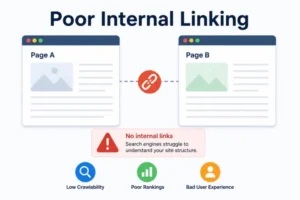
Internal linking helps search engines understand website structure and keeps users engaged longer.
Many websites either ignore internal links or overuse them incorrectly.
Benefits of Internal Linking
- Improves website navigation
- Distributes page authority
- Helps search engines crawl pages
- Increases user engagement
- Reduces bounce rates
Link related content naturally within articles to guide users to additional useful pages.
Not Optimizing Images
Large or unoptimized images can slow down websites and hurt SEO performance.
Image optimization is often overlooked, making it one of the hidden SEO mistakes many website owners make.
Image Optimization Tips
- Compress image sizes
- Use descriptive file names
- Add alt text
- Choose modern formats like WebP
- Use responsive images
Optimized images improve loading speed and accessibility.
Ignoring Technical SEO
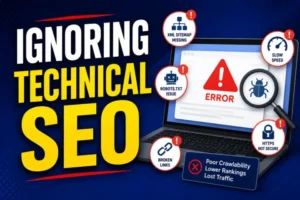
Technical SEO ensures search engines can properly crawl and index your website.
Without proper technical optimization, even high-quality content may struggle to rank.
Important Technical SEO Areas
XML Sitemap
An XML sitemap helps search engines discover important pages on your website.
Robots.txt File
This file controls which pages search engines can crawl.
Broken Links
Broken links create poor user experiences and reduce trust.
HTTPS Security
Secure websites rank better and build visitor confidence.
Regular technical audits help identify and fix hidden SEO mistakes.
Focusing Only on Search Engines
One of the biggest modern SEO mistakes is optimizing only for algorithms instead of real users.
Search engines reward websites that provide valuable experiences to visitors. User engagement signals such as time on page, bounce rate, and interaction matter more than ever.
Focus on User Experience
- Write helpful content
- Improve readability
- Use clear navigation
- Add engaging visuals
- Structure content properly
User-focused SEO creates sustainable long-term growth.
Neglecting Content Updates
SEO is not a one-time process. Outdated content can lose rankings over time.
Updating old articles with fresh information, better keywords, and improved formatting helps maintain search visibility.
Content Update Strategies
- Add recent statistics
- Improve headings
- Refresh keywords
- Fix broken links
- Update screenshots and examples
Regular updates signal freshness to search engines.
Final Thoughts
Avoiding common SEO mistakes is essential for building a successful website. From keyword stuffing and slow website speed to poor mobile optimization and weak content, even small SEO errors can impact your rankings significantly.
Modern SEO focuses on quality, user experience, and technical performance. By creating valuable content, optimizing website speed, improving mobile usability, and following SEO best practices, you can improve rankings and grow your online presence naturally.
Remember that SEO is a long-term strategy, not a quick fix. Consistent improvement and avoiding outdated tactics will help your website achieve sustainable success.
FAQs
1. What are the most common SEO mistakes?
Some common SEO mistakes include keyword stuffing, slow website speed, poor mobile optimization, and low-quality content.
2. Does duplicate content hurt SEO?
Yes, duplicate content can confuse search engines and negatively affect rankings.
3. Why is mobile optimization important for SEO?
Google uses mobile-first indexing, so mobile-friendly websites perform better in search results.
4. How often should I update website content?
Updating important content every few months helps maintain rankings and improves user experience.
