
10 Powerful Content Marketing Strategy Tips for Business Growth
In today’s digital world, businesses need more than advertisements to attract customers. People now search for valuable information before making buying decisions. This is where a strong content marketing strategy becomes essential. High-quality content helps businesses connect with their audience, build trust, improve SEO rankings, and increase conversions over time.
Whether you run a small business, startup, e-commerce store, or large company, creating the right content can help you stand out in a competitive market. A successful content marketing strategy is not just about publishing blogs or social media posts. It involves planning, research, audience understanding, consistency, and performance tracking.
This guide explains everything you need to know about building an effective content marketing strategy that drives traffic, engagement, and long-term business growth.

What Is a Content Marketing Strategy?
A content marketing strategy is a planned approach to creating, publishing, and distributing valuable content to attract and engage a target audience.
The goal is to provide helpful information that solves user problems while encouraging them to take action. These actions may include:
- Purchasing a product
- Contacting a business
- Subscribing to newsletters
- Sharing content
- Downloading resources
A strong content marketing strategy focuses on delivering consistent value instead of directly pushing sales.
Read more: 7 Powerful Website Conversion Issues Destroying Your Sales Fast
Why Content Marketing Matters for Businesses
Modern customers trust informative and useful content more than traditional advertisements. Businesses that create quality content often build stronger relationships with their audience.
Here are some major benefits of content marketing:
- Improves search engine rankings
- Builds brand authority
- Increases website traffic
- Generates quality leads
- Enhances customer trust
- Supports social media growth
Content also provides long-term value because optimized articles can continue generating traffic for years.
Understand Your Target Audience
One of the most important steps in creating a successful content marketing strategy is understanding your audience.
Before creating content, ask questions like:
- Who are your ideal customers?
- What problems do they face?
- What type of content do they prefer?
- Which platforms do they use?
Understanding audience behavior helps businesses create content that feels relevant and useful.
Creating customer personas can also help define user interests, goals, and challenges more clearly.
Set Clear Content Marketing Goals
Every content marketing strategy should have measurable goals. Without clear objectives, it becomes difficult to track success.
Common content marketing goals include:
Increase Website Traffic
SEO-focused content can help attract organic visitors from search engines.
Generate Leads
Landing pages, blogs, and downloadable resources can collect customer inquiries.
Build Brand Awareness
Consistent content helps businesses become more recognizable online.
Improve Customer Engagement
Interactive and valuable content encourages users to spend more time with your brand.
Clear goals help shape the direction of your content plan.
Perform Keyword Research
Keyword research plays a major role in SEO success. It helps identify what users are searching for online.
When selecting keywords:
- Focus on search intent
- Use long-tail keywords
- Analyze competitor keywords
- Target low-competition opportunities
For example, businesses creating a content marketing strategy should naturally include relevant SEO keywords within headings and content without overstuffing.
Good keyword research helps improve visibility and attract the right audience.
Create High-Quality and Valuable Content
Content quality remains one of the most important ranking factors for search engines.
Your content should:
- Solve user problems
- Be easy to read
- Provide accurate information
- Include updated insights
- Offer real value
Avoid writing content only for search engines. Instead, focus on helping readers genuinely understand the topic.
Well-written blogs, guides, videos, and infographics often perform better because they keep users engaged longer.
Types of Content You Can Use
An effective content marketing strategy includes multiple content formats to reach different audiences.
| Content Type | Purpose | Best Use |
|---|---|---|
| Blog Posts | Improve SEO and traffic | Informational content |
| Videos | Increase engagement | Tutorials and promotions |
| Infographics | Simplify information | Social sharing |
| Social Media Posts | Boost visibility | Audience interaction |
| Case Studies | Build trust | Customer proof |
| Email Newsletters | Nurture leads | Customer retention |
Using different content formats keeps your marketing fresh and engaging.
Focus on SEO Optimization
SEO and content marketing work together closely. Without SEO, even great content may struggle to reach users.
Important SEO practices include:
Use Keywords Naturally
Place keywords in titles, headings, introductions, and body content naturally.
Optimize Meta Tags
Strong meta titles and descriptions improve click-through rates.
Add Internal Links
Internal linking improves website navigation and SEO structure.
Improve Readability
Use short paragraphs, headings, and simple language for better user experience.
Optimize Images
Compressed images improve loading speed and performance.
An SEO-focused content marketing strategy helps generate long-term organic traffic.
Build a Content Calendar
Consistency is essential in content marketing. Publishing randomly can confuse audiences and reduce engagement.
A content calendar helps businesses:
- Plan content topics
- Maintain consistency
- Align campaigns
- Track publishing schedules
Planning content in advance also improves workflow efficiency and helps teams stay organized.
Promote Your Content Effectively
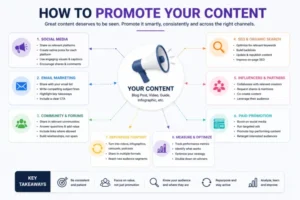
Creating content alone is not enough. Promotion is necessary to reach the right audience.
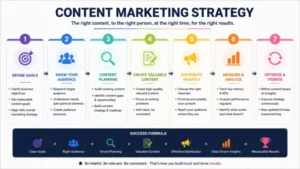
Effective promotion channels include:
Social Media
Share blogs, videos, and updates across platforms like Instagram, Facebook, LinkedIn, and Twitter.
Email Marketing
Email newsletters help distribute valuable content directly to subscribers.
Guest Posting
Publishing content on other websites increases reach and backlinks.
Paid Advertising
Boosting high-performing content through ads can increase visibility quickly.
Promotion helps maximize the impact of your content marketing strategy.
Analyze Content Performance
Tracking performance helps identify what works and what needs improvement.
Important metrics include:
- Website traffic
- Bounce rate
- Time on page
- Conversion rate
- Social shares
- Keyword rankings
Tools like Google Analytics and Search Console provide valuable insights into user behavior and SEO performance.
Data-driven improvements help businesses optimize future content more effectively.
Common Content Marketing Mistakes to Avoid
Many businesses struggle because they make avoidable mistakes in their content marketing strategy.
Common mistakes include:
- Publishing low-quality content
- Ignoring SEO
- Failing to understand the audience
- Posting inconsistently
- Over-promoting products
- Not tracking performance
Avoiding these mistakes can improve engagement and long-term results significantly.
Importance of Consistency in Content Marketing
Content marketing is a long-term strategy. Results usually take time because SEO and audience trust develop gradually.
Businesses that consistently publish valuable content often see:
- Better rankings
- Increased authority
- More leads
- Stronger customer relationships
Patience and consistency are key to long-term success.
Conclusion
A successful content marketing strategy helps businesses attract the right audience, improve SEO performance, and build long-term trust. In today’s competitive digital environment, high-quality content has become one of the most effective ways to grow online visibility and customer engagement.
From audience research and keyword planning to SEO optimization and content promotion, every step plays an important role in achieving better results.
Businesses that focus on creating valuable, user-friendly, and consistent content are more likely to generate traffic, leads, and conversions over time. Instead of treating content marketing as a short-term tactic, companies should view it as a long-term investment in brand growth and customer relationships.
FAQs
1. What is a content marketing strategy?
A content marketing strategy is a plan for creating and distributing valuable content to attract and engage a target audience.
2. Why is content marketing important?
Content marketing improves SEO, builds trust, increases website traffic, and helps generate leads.
3. How often should I publish content?
Consistency matters more than frequency. Businesses should maintain a regular publishing schedule based on their goals.
4. Which type of content works best for SEO?
SEO blogs, guides, tutorials, and informative articles usually perform well in search engine rankings.
