7 Powerful Website Conversion Issues Destroying Your Sales Fast
Many businesses invest heavily in website design, SEO, and paid advertising but still struggle to generate leads or sales. Getting traffic is only one part of online success. The real challenge is converting visitors into customers. If your website receives visitors but fails to generate inquiries, purchases, or sign-ups, you are likely facing serious website conversion issues.
In today’s competitive digital landscape, users expect websites to load quickly, look professional, and provide a seamless experience. Even small problems can reduce trust and push potential customers away. From poor design to weak calls-to-action, several factors can impact your conversion rates.
This guide explains the most common website conversion issues and how you can fix them to improve engagement, increase trust, and boost conversions effectively.
What Are Website Conversion Issues?
Website conversion issues refer to the problems that prevent visitors from taking desired actions on your website. These actions may include:
- Purchasing a product
- Filling out a contact form
- Booking a service
- Signing up for a newsletter
- Downloading a resource
When users visit your website and encounter conversion issues but leave without taking action, it indicates that something is stopping them from moving forward.
Identifying and fixing these issues can significantly improve your website’s performance and overall business growth.
Slow Website Speed Is Driving Visitors Away
One of the biggest website conversion issues is slow loading speed. Modern users expect websites to load within a few seconds. If your pages take too long, visitors often leave before exploring your content.
Website speed affects:
- User experience
- Bounce rate
- Search engine rankings
- Customer trust
Here are some common causes of slow websites:
| Problem | Impact on Conversions | Solution |
|---|---|---|
| Large Images | Slow loading pages | Compress images |
| Poor Hosting | Website downtime | Upgrade hosting |
| Heavy Scripts | Delayed page response | Minify code |
| Too Many Plugins | Reduced performance | Remove unnecessary plugins |
| No Caching | Slow repeat visits | Enable caching |
Improving loading speed can instantly increase user satisfaction and conversion rates.
Your Website Design Looks Outdated

First impressions matter online. Visitors often judge your business within seconds of landing on your website.
An outdated or cluttered design can make your brand appear unprofessional and untrustworthy. Poor layouts, inconsistent colors, and difficult navigation create frustration for users.
A modern website conversion issue should include:
- Clean layout
- Consistent branding
- Easy navigation
- Mobile responsiveness
- Proper spacing
- Clear typography
Professional design builds credibility and encourages users to stay longer on your website.
Weak or Confusing Call-to-Actions
Many website conversion issues happen because visitors do not know what action to take next.
Your call-to-action (CTA) should clearly guide users toward the next step. Weak buttons like “Click Here” often fail to create urgency or interest.
Instead, use action-focused CTAs such as:
- Get Started Today
- Book a Free Consultation
- Download the Guide
- Start Your Free Trial
CTA buttons should also stand out visually and appear in strategic locations across the page.
Read More: Google Ranking Factors 2026
Poor Mobile Experience
Mobile traffic continues to grow every year. If your website does not work properly on smartphones and tablets, you may lose a large number of potential customers.
Common mobile problems include:
- Small text sizes
- Buttons too close together
- Slow loading speed
- Broken layouts
- Difficult navigation
Google also prioritizes mobile-friendly websites in search rankings. Improving mobile usability not only increases conversions but also supports SEO performance.
Your Content Does Not Match User Intent
Visitors arrive on your website expecting solutions to their problems. If your content fails to meet those expectations, they will quickly leave.
Many businesses focus too much on promoting themselves instead of solving customer problems.
Effective website content should:
- Address user pain points
- Explain the benefits clearly
- Use simple language
- Build trust
- Guide users toward action
Understanding search intent helps create more relevant and engaging content.
Lack of Trust Signals
Trust plays a major role in online conversions. Users hesitate to buy from websites that appear unreliable or unfamiliar.
Missing trust elements are common website conversion issues that reduce customer confidence.
Important trust signals include:
- Customer reviews
- Testimonials
- Secure payment badges
- SSL certificates
- Case studies
- Social proof
Displaying these elements reassures visitors that your business is credible and trustworthy.
Complicated Forms Reduce Conversions
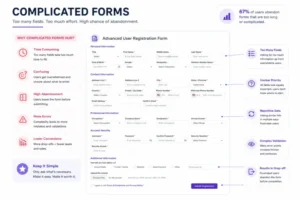
Long or confusing forms often discourage users from completing inquiries or sign-ups.
Many businesses ask for unnecessary information during the conversion process, making it harder for users to take action.
Short and simple forms generally perform better.
For example, instead of asking for:
- Full address
- Company size
- Multiple contact details
Start with only:
- Name
- Phone number
Reducing friction improves user experience and increases form submissions.
Lack of Clear Value Proposition
Visitors should immediately understand what your business offers and why it is valuable.
If your homepage or landing page fails to communicate clear benefits, users may become confused and leave.
A strong value proposition should answer:
- What do you offer?
- Who is it for?
- Why is it beneficial?
- What makes you different?
Clear messaging helps users connect with your brand faster.
Too Many Distractions on the Website
Pop-ups, excessive animations, autoplay videos, and too many links can overwhelm visitors.
A cluttered website distracts users from the primary conversion goal.
Simplifying your design and removing unnecessary elements can improve focus and increase engagement.
Minimal and user-focused designs often achieve better conversion rates because visitors can navigate more easily.
Poor SEO Brings the Wrong Audience
Sometimes the issue is not your website itself but the type of traffic you attract.
If your SEO strategy targets irrelevant keywords, visitors may land on your website without a genuine interest in your products or services.
This leads to:
- High bounce rates
- Low engagement
- Poor conversion rates
Targeting the right keywords and optimizing content for user intent helps attract qualified traffic more likely to convert.
No Analytics or Conversion Tracking
Without tracking user behavior, it becomes difficult to identify website conversion issues.
Tools like website conversion issues, Analytics and heatmaps provide valuable insights into how users interact with your website.
Tracking helps you understand:
- Where users drop off
- Which pages perform best
- Which CTAs receive clicks
- How visitors navigate your site
Data-driven improvements are essential for long-term optimization.
Your Website Lacks Emotional Connection
People often make decisions based on emotions and justify them with logic later.
Websites that feel cold, generic, or overly technical may struggle to connect with visitors.
Using relatable language, storytelling, visuals, and customer-focused messaging helps build emotional engagement.
When users feel understood, they are more likely to trust your brand and take action.
Conclusion
Website traffic alone does not guarantee business success. If visitors are not converting, there are likely underlying website conversion issues affecting performance.
Slow loading speed, poor mobile design, weak CTAs, lack of trust signals, and unclear messaging are some of the most common reasons websites fail to convert users into customers.
The good news is that most conversion issues can be fixed with proper optimization and user-focused improvements. By understanding visitor behavior and creating a smoother experience, businesses can increase engagement, generate more leads, and improve overall conversions.
Successful websites focus not only on attracting visitors but also on guiding them toward meaningful actions through trust, clarity, and simplicity.
FAQs
1. What are website conversion issues?
Website conversion issues are problems that prevent visitors from taking desired actions like purchases, sign-ups, or inquiries.
2. How can I improve website conversions?
You can improve conversions by increasing page speed, improving design, simplifying forms, and using strong CTAs.
3. Does mobile optimization affect conversions?
Yes, a mobile-friendly website improves user experience and helps increase conversion rates significantly.
4. Why is my website getting traffic but no sales?
This often happens because of poor user experience, unclear messaging, weak trust signals, or targeting the wrong audience.
